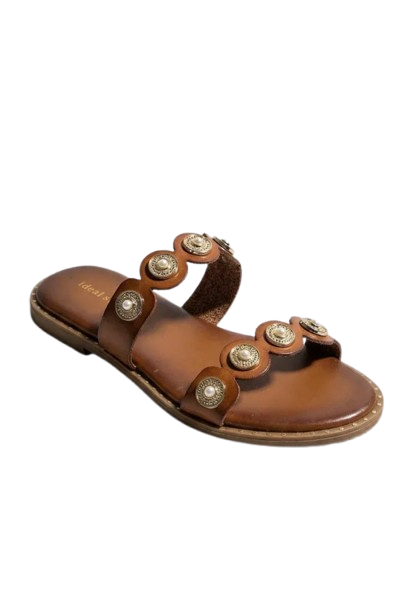
Artisan Studded Leather Sandal
Student Name :
Mentor Name :
Company :
Green Producer Diary
My Motivation
I wanted to create a sandal that celebrates craftsmanship while remaining responsible. Summer footwear is often treated as disposable, yet it uses high-impact materials. For me, sustainability means respecting both the material and the artisan behind it. I aimed to design something simple, repairable, and emotionally durable. Beauty should not come at the expense of transparency.
My Vetrine Journey
In the first month I analyzed why sandals are rarely repaired and discovered that glued soles and decorative elements make them difficult to disassemble. During months two and three I redesigned the strap structure to reduce overlapping layers. By month four I sourced vegetable-tanned leather to avoid heavy chemical finishes.
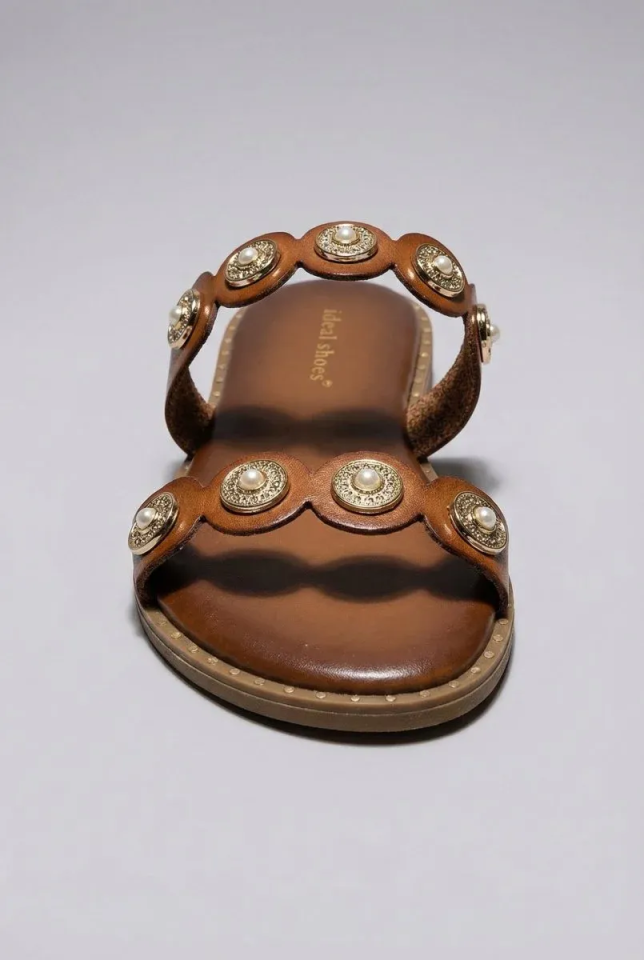
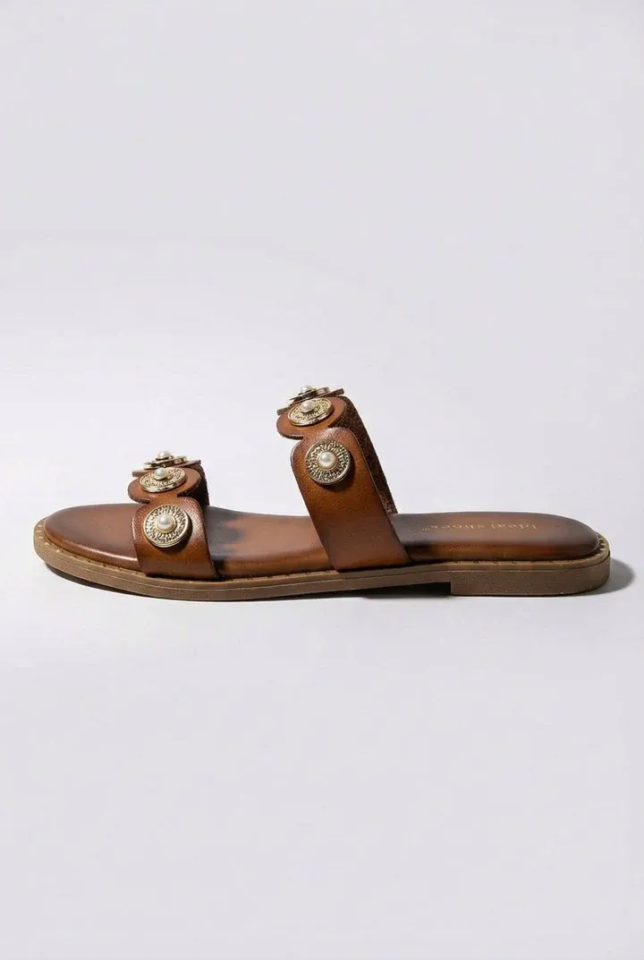
The biggest challenge was the decorative studs — metal details often prevent recyclability. I worked on a fastening method that allows each stud to be removed individually instead of being permanently fixed. In month five I tested cork blends to reduce synthetic foam usage. Month six focused on comfort testing and adjusting the footbed ergonomics. In month seven I simplified the outsole to use fewer material compounds. The final month was dedicated to documenting suppliers and building a transparent material record.
Sustainability in Action
How did you consider and implement the following aspects in your product development?
Sustainability Aspect | My Actions |
Environmental | Vegetable-tanned leather, reduced synthetic foam, removable studs, minimized mixed materials |
Social | Collaborated with local artisan workshop, transparent sourcing, supported regional cork suppliers |
Financial | Durable design reduces replacement frequency, replaceable studs extend lifespan, efficient cutting reduced material waste |
A Message to Consumers
This sandal was designed to be worn, repaired, and worn again. Every detail was considered to balance craftsmanship and responsibility. When you choose it, you support slower production and longer product life.
A Message to Future Learners
Start by questioning what makes a product difficult to repair. Small construction decisions determine long-term impact. Sustainability is not about removing beauty — it is about designing beauty that lasts.
Product Details
Product Name
Artisan Studded Leather Sandal
Reference / SKU
SDL-25-TAN-03
Color
Tan Brown
Size
EU 36–41 (sample shown EU 38)
Weight
520 g (pair)
Quantity (if multi-pack)
Pair
Materials Information
Composition
- Upper straps: 85% bovine leather
- Footbed lining: vegetable-tanned leather
- Midsole: cork and natural rubber blend
- Outsole: thermoplastic rubber (TPR)
- Decorative elements: zinc alloy studs (nickel-free)
- Adhesives: water-based cement
% Recycled Materials
10% (rubber blend component)
Traceable assets (materials origin IDs, fibers batches)
- Leather batch ID: LEA-GR-0425-7782
- Cork supplier batch: CK-PT-5521
- Metal studs batch: ZN-IT-3904
Manufacturing & Supply Chain
1
Location
Valencia, Spain
2
Date
May 2025
3
Type of processes
- Vegetable tanning
- Manual strap cutting
- Stud application (mechanical press)
- Cemented sole bonding
- Edge finishing and polishing
supply chain map
Tier 4Raw material
- Cattle farming — Greece
- Cork harvesting — Portugal
- Recycled rubber input — Spain
Tier 3Material processing
- Tannery — Italy (vegetable tanning, chrome-free)
- Rubber blending facility — Spain
Tier 2Component manufacturing
- Strap cutting & finishing — Greece
- Metal ornament casting — Italy
Tier 1Final assembly
- Footwear workshop — Greece (small artisan unit)
Environmental & Social Impact
Reusability: High
Repairability: Medium (sole replaceable by specialist; studs replaceable)
Material separability: Moderate
- Microplastic shedding risk: Very Low
- Synthetic fiber content: Minimal
- Coating/finish risk: Low (vegetable-tanned leather)
Small-scale workshop production
Average assembly time: 1.5 hours/pair
Care, Repair & Lifetime Extension
1
Care Instructions
- Wipe with soft damp cloth
- Apply leather balm every 4–6 months
- Avoid prolonged water exposure
- Store in dry, ventilated area
2
Repair Information
- Sole replacement possible
- Studs individually replaceable
- Footbed can be refurbished
- Expected lifetime: 4–7 years with regular use
- Repair difficulty: Medium