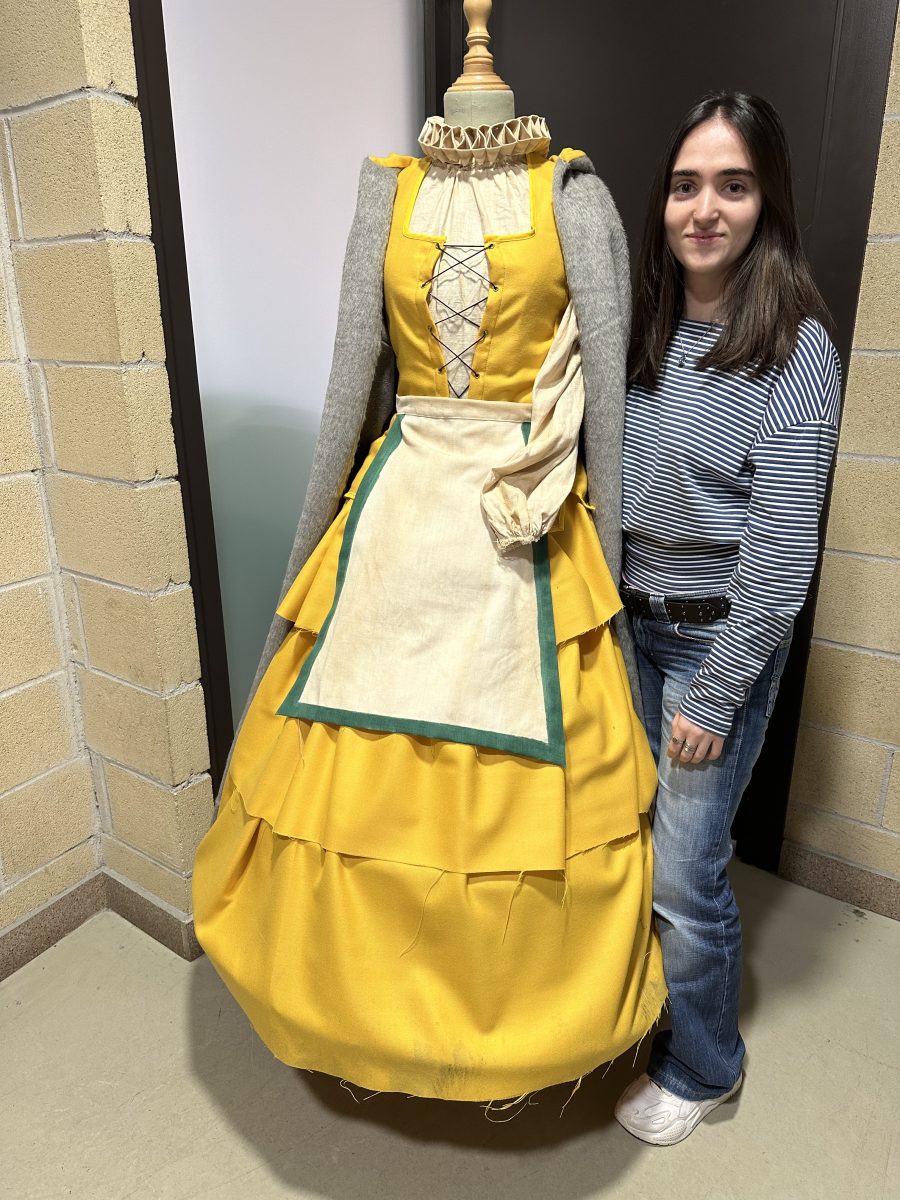
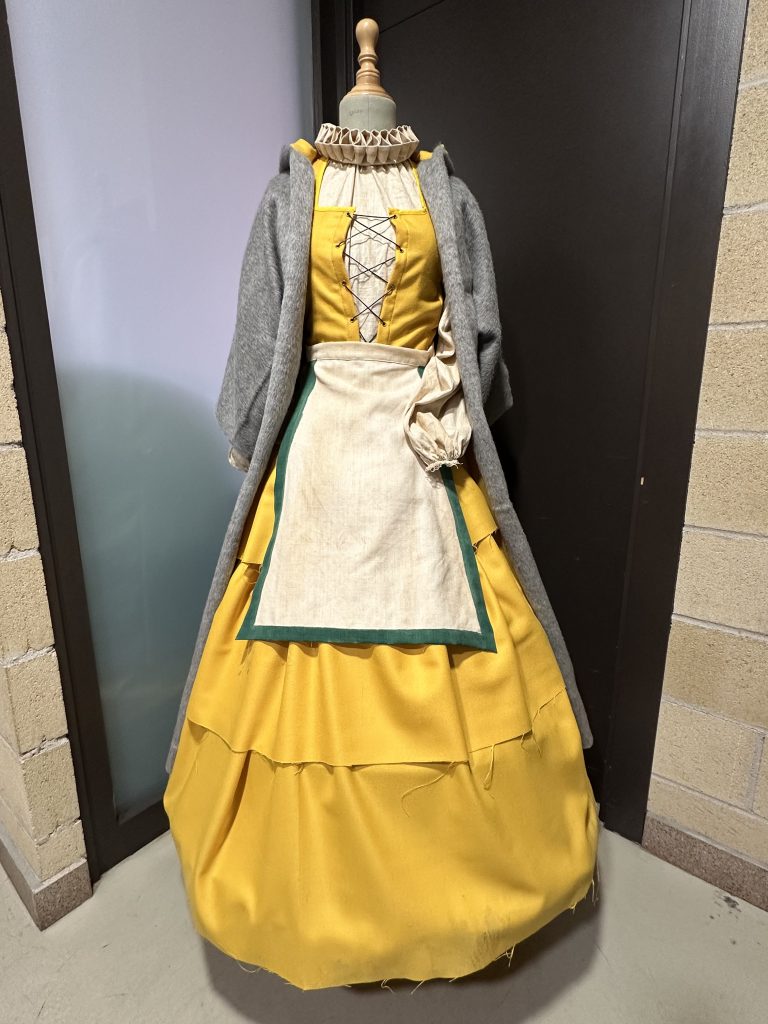
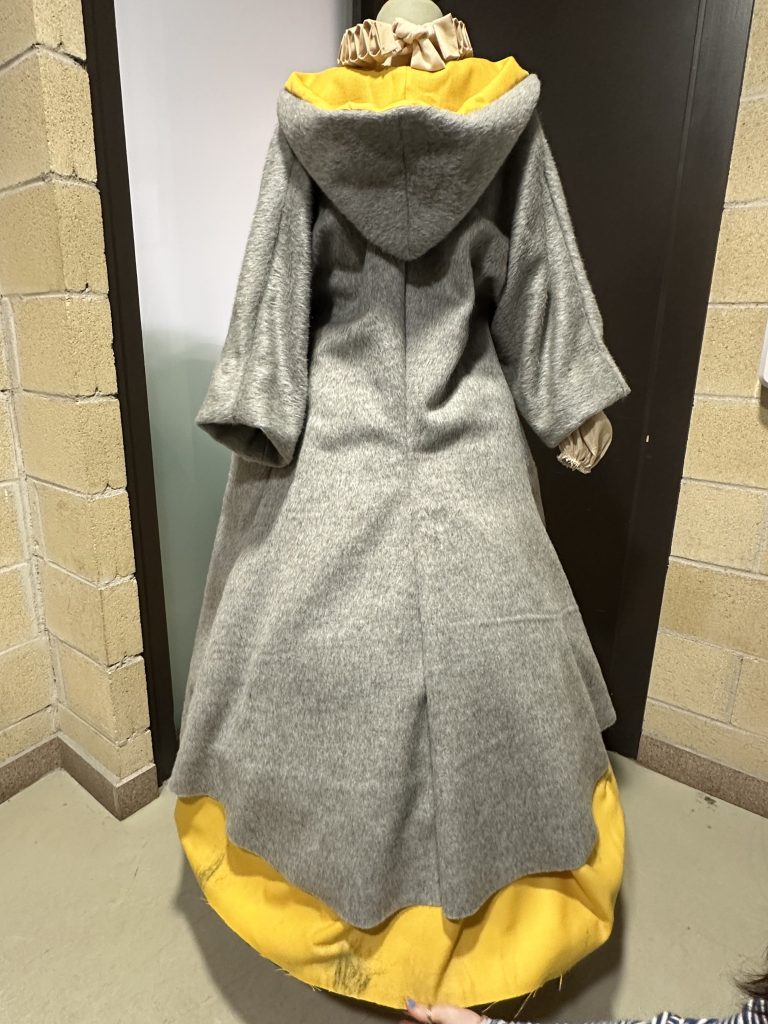
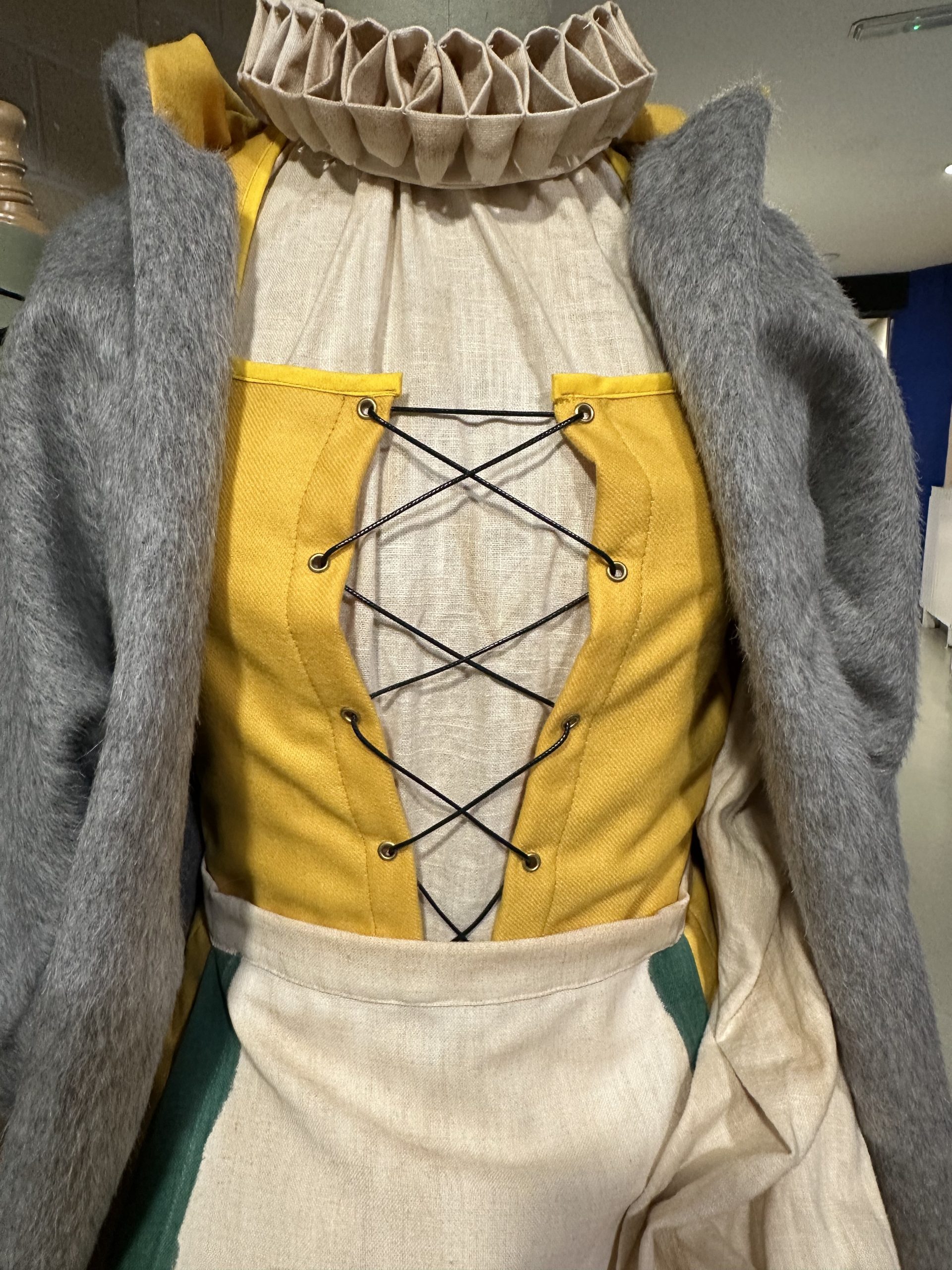
I was inspired by our mythology traditions and tried to create a garment that brings us back to the medieval times when myths were present in everyday life. I think sustainability is important because we all know that Textile is a very polluting industry and if we’re part of it we should try to change this issue.
My Vetrine Journey
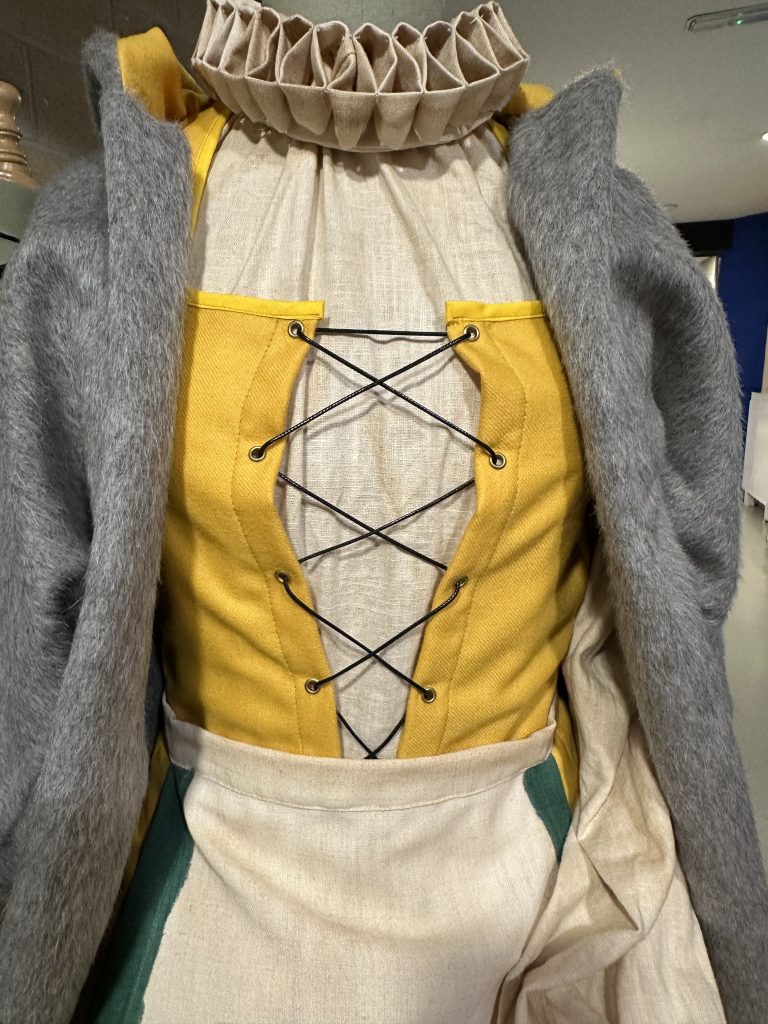
The three main complications of this project were the skirt, mainly the joining of the middle layer to the base of the skirt, the creation of the layer due to lack of time, and the bias binding on different parts of the waistcoat. I overcame these challenges by working with patience and with the help of my teachers and the guidance of my mentor Raquel.
Sustainability Aspect
Your Actions / Explanation
Environmental
Recycled materials and natural fibres
Social
not applicable
Financial
Low production cost, long product lifespan, used sustainable techniques (reused fabrics)
A Message to Consumers
The story behind this garment is an inspiration in Basque mythology and its influence in folklore and culture. It was also a good practice in design and manufacturing using recycled materials.
A Message to Future Learners
I’d like to tell them that materials, as we all know, are the largest environmental impact in fashion.
And that it’s important to use natural fibres and if possible organic cotton, linen or hemp, or at least recycled fibers or fabrics from other discarded materials or products. Like I have used wool and linen that were fabrics for other previous uses.
Product Details
Product Name
Basque mythology sorgina
Reference / SKU
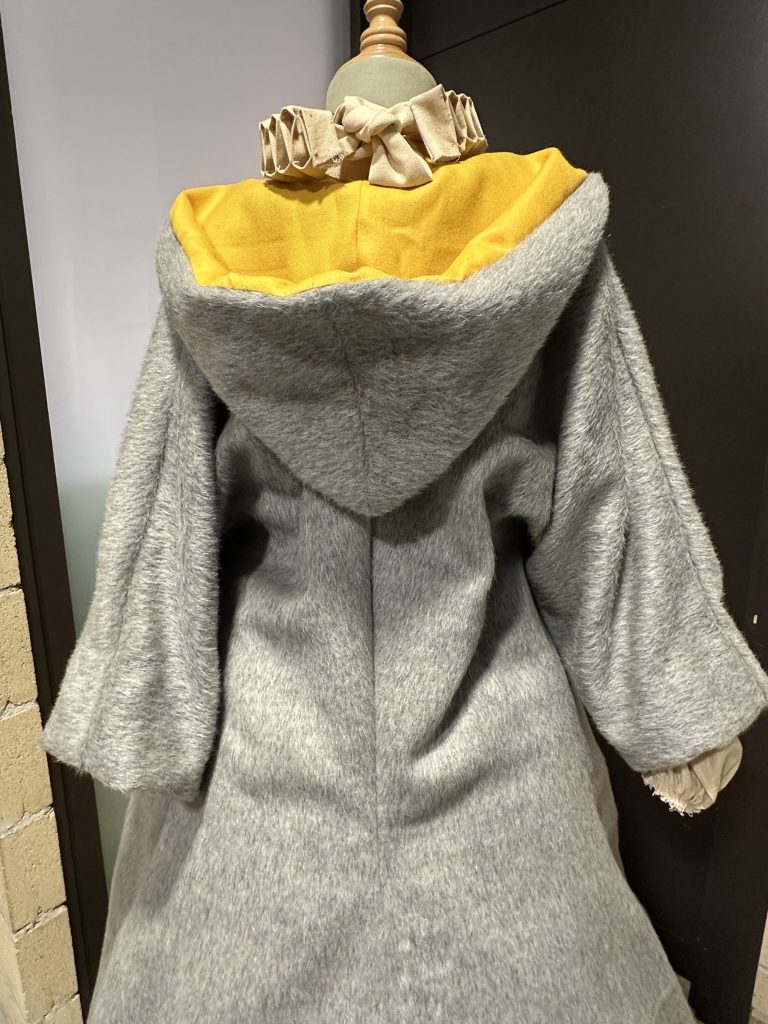
Woolen long dress with hooded cape
VETRINE-sorgina AEG_2
Color
Yellow dress and and gray cape
Size
M
Weight
3 kg
Quantity (if multi-pack)
One
Materials Information
Composition
Wool, linen; The skirt’s hoops are made of cane, and the sleeve cuffs are elasticated