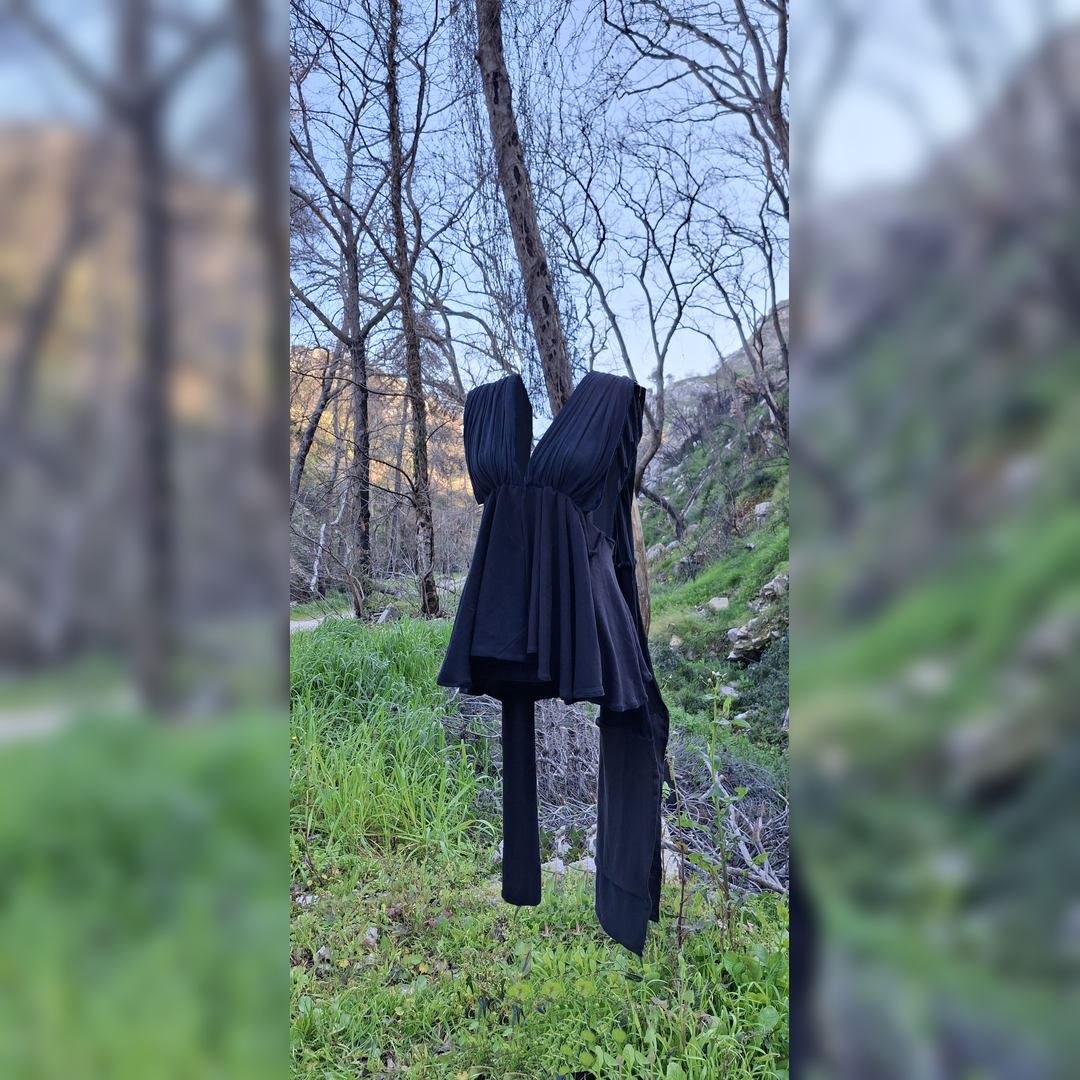
Artemis/Diana Convertible Mini Dress
Student Name : Anna Bazina
Mentor Name :
Company : CHIMAR
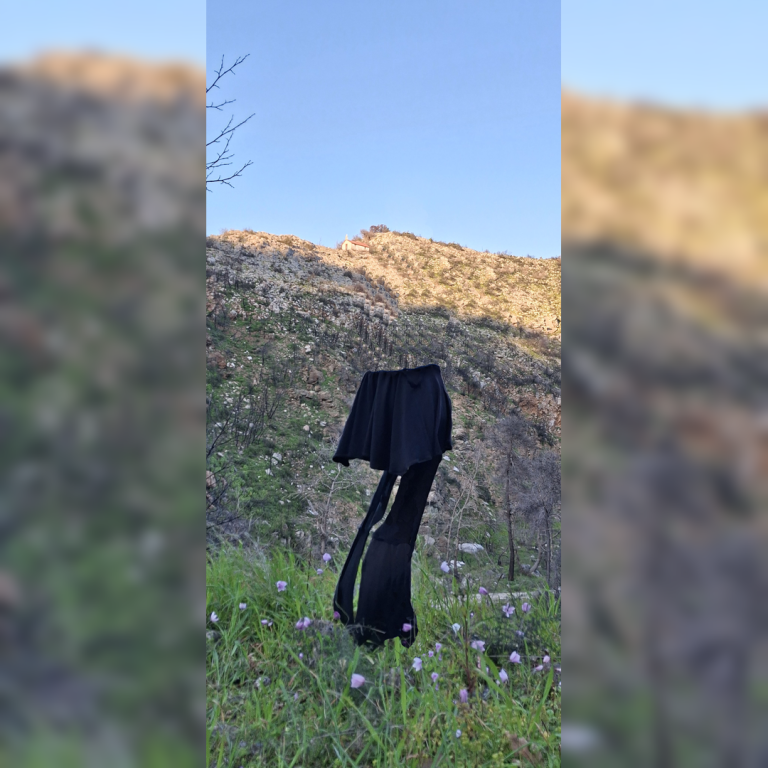
Green Producer Diary
My Motivation
I wanted to respond to the problem of textile overproduction by working with garments that are often treated as basic, replaceable items. Black T-shirts and tank tops are everywhere, yet they are also among the pieces most easily discarded when they fade or lose their appeal. By transforming these materials into a new garment inspired by Artemis/Diana, I wanted to show that upcycling can produce something expressive, desirable, and wearable. Sustainability matters to me because design should extend the life of what already exists instead of constantly demanding new resources.
My Vetrine Journey
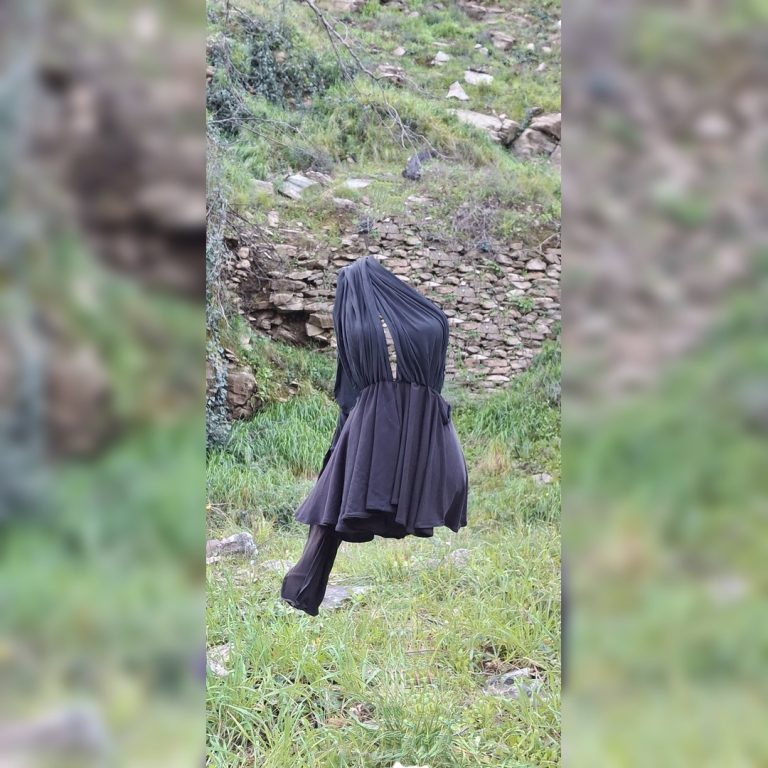
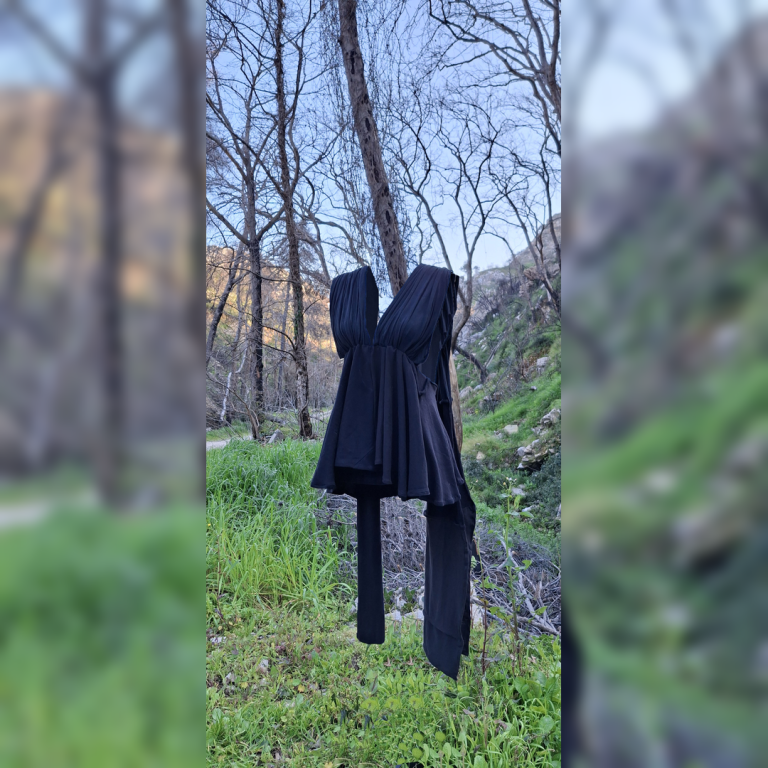
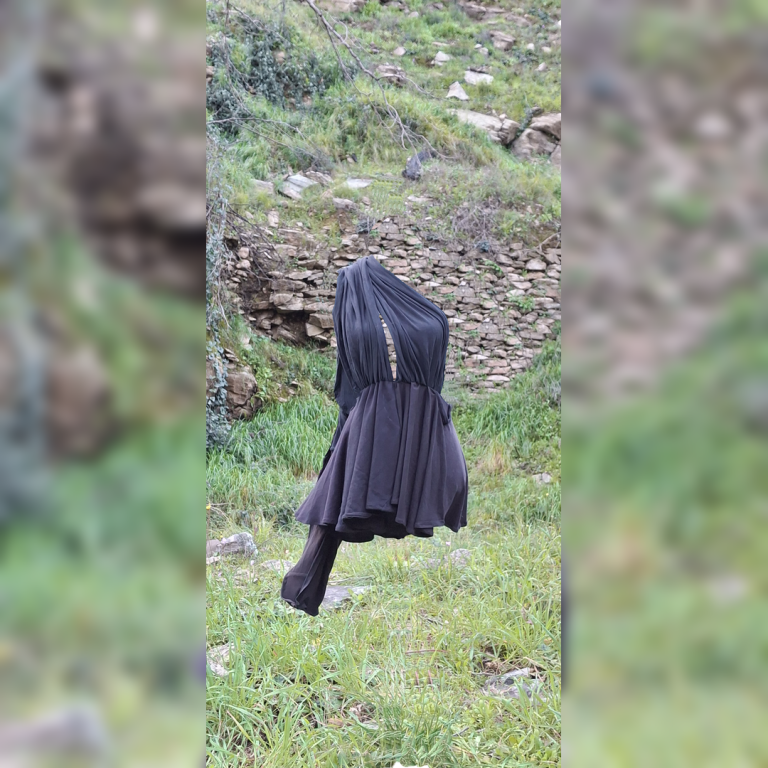
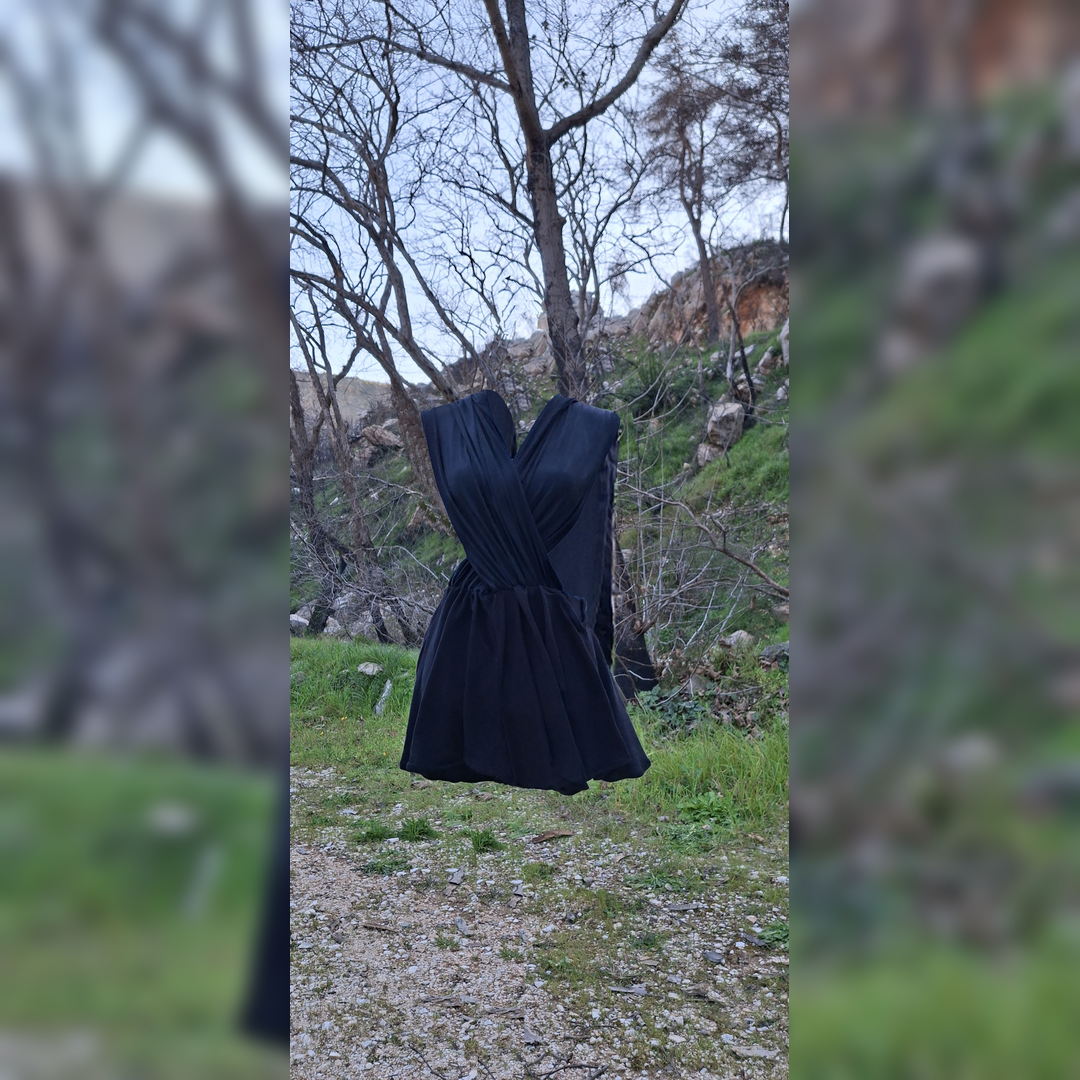
My project started with research on textile waste, excess stock, and the way basic garments are overproduced and undervalued. From there, I developed the concept of “The many faces of Artemis” and connected it to Greek and Roman mythology, focusing on the three feminine identities of Artemis, Selene, and Hecate. I gathered old black T-shirts and tank tops and studied how their stretch, drape, and faded surfaces could be reused in a new form. The biggest challenge was to create a garment that felt intentional and refined while using soft jersey pieces that originally belonged to different items. I also had to work around the limits of the materials, since my available resources were a cotton/poly blend rather than the all-cotton option I had first imagined. Instead of hiding those limitations, I used them to guide the final silhouette and construction. The result was an adjustable, multiuse mini dress inspired by Greco-Roman hunting robes, built through experimentation, draping, and sewing. Through the process, I understood even more clearly that waste materials can become the starting point for strong storytelling and design.
|
Sustainability Aspect |
Your Actions / Explanation |
|---|---|
|
Environmental |
I upcycled discarded black T-shirts and tank tops, reducing textile waste and giving existing materials a longer life through a new garment. |
|
Social |
The project raises awareness about overproduction and overconsumption and encourages viewers to rethink the value of everyday clothing instead of treating it as disposable. |
|
Financial |
The prototype was developed with low-cost existing materials, showing that sustainable fashion can be accessible and that creative value does not depend on expensive sourcing. |
A Message to Consumers
This garment is made from clothes that would normally be overlooked or thrown away. I would like voters to see that upcycling is not only an environmental choice, but also a creative method that can transform ordinary basics into a garment with identity and narrative.
A Message to Future Learners
Start with what is already around you and let the material guide your design decisions. Constraints are not a weakness in sustainable fashion; they often become the reason a project finds its strongest form.
Product Details
Product Name
Artemis/Diana Convertible Mini Dress
Reference / SKU
VETRINE-ANNA-ARTEMIS-BLK-001
Color
Black
Size
One size / adjustable
Weight
420 g
Quantity (if multi-pack)
One
Materials Information
Composition
Upcycled cotton/poly blend jersey from black T-shirts and tank tops
% Recycled Materials
Approx. 92% upcycled textile content
Reusability: Multiuse / adjustable garment that can be styled in different ways
Recyclability: Partially recyclable depending on local blended-textile systems
Traceable assets (materials origin IDs, fibers batches)
Upcycled black T-shirts and tank tops collected from overstock / discarded basics Selected plain and graphic jersey pieces sorted for drape, stretch and reuse
Manufacturing & Supply Chain
1
Location
Greece
2
Date
Research & concept development: 2026-01-15
Collection and selection of garments: 2026-01-28
Pattern experimentation and draping: 2026-02-10
Final assembly and finishing: 2026-02-24
3
Type of processes
Sorting, disassembly, cutting, draping, pattern adaptation, sewing, tying / adjustable finishing
supply chain map
Tier 4Raw material
Tier 3Material processing
Tier 2Component manufacturing
Tier 1Final assembly
Environmental & Social Impact
Upcycled: Yes, Recyclable in part: Yes, Low-waste design: Yes, Low-cost prototype: Ye
18 hours , 8€
Care, Repair & Lifetime Extension
1
Care Instructions
Hand wash cold or machine wash on gentle cycle, do not tumble dry, hang dry
2
Repair Information
Restitch seams or ties if needed. Reuse panels for future garments or recycle through textile collection where available.