Kavadi Revival
Student Name : Anastasia Moraiti
Mentor Name :
Company : CHIMAR
Green Producer Diary
My Motivation
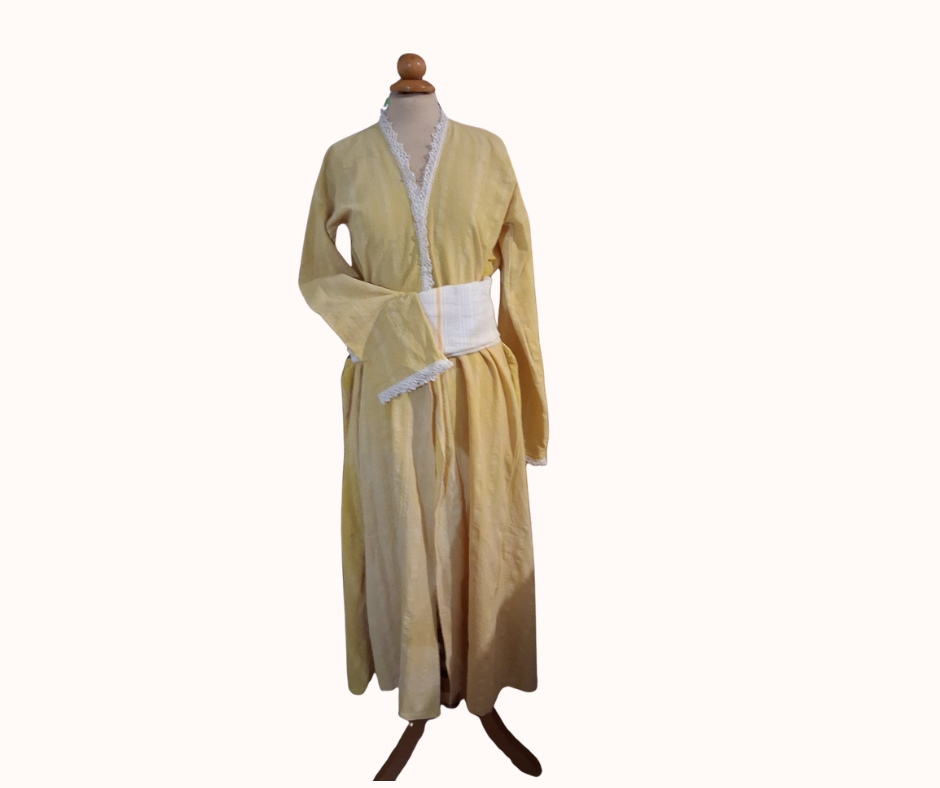
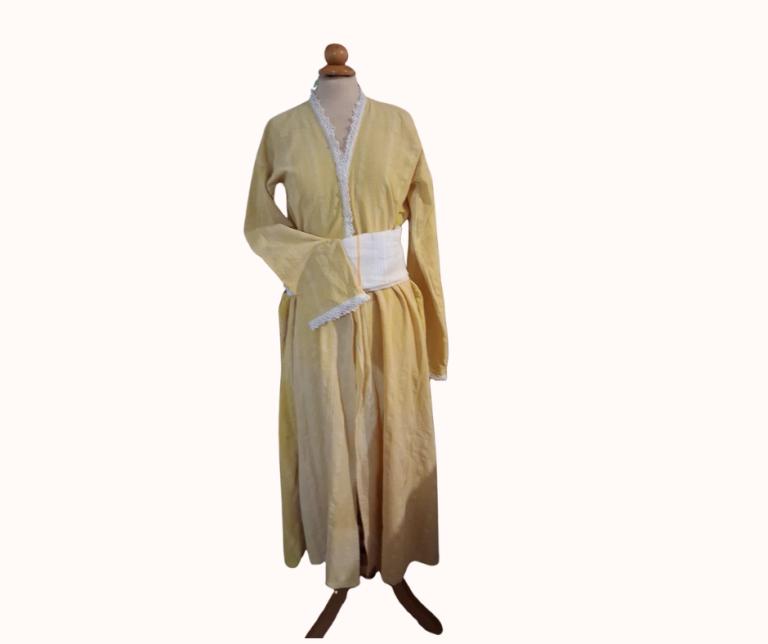
I was inspired by the traditional kavadi of Kalymnos and by the idea that household textiles can become contemporary garments without losing their memory. Working with an old sheet allowed me to connect tradition, simplicity, and sustainability in one piece. The turmeric dye gave the fabric a warm, sunlit tone that feels Mediterranean and handmade. Sustainability is important to me because it shows that beauty can come from reuse, local knowledge, and respect for materials that already exist.
My Vetrine Journey
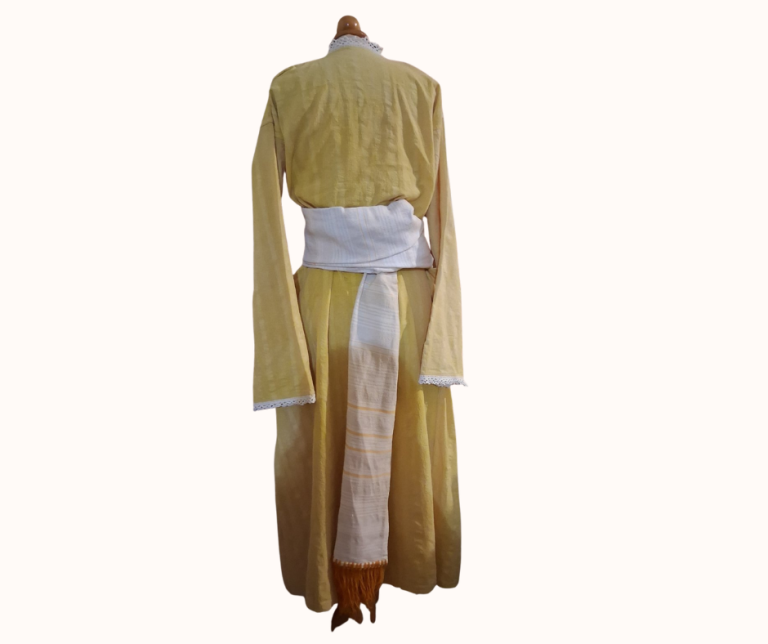
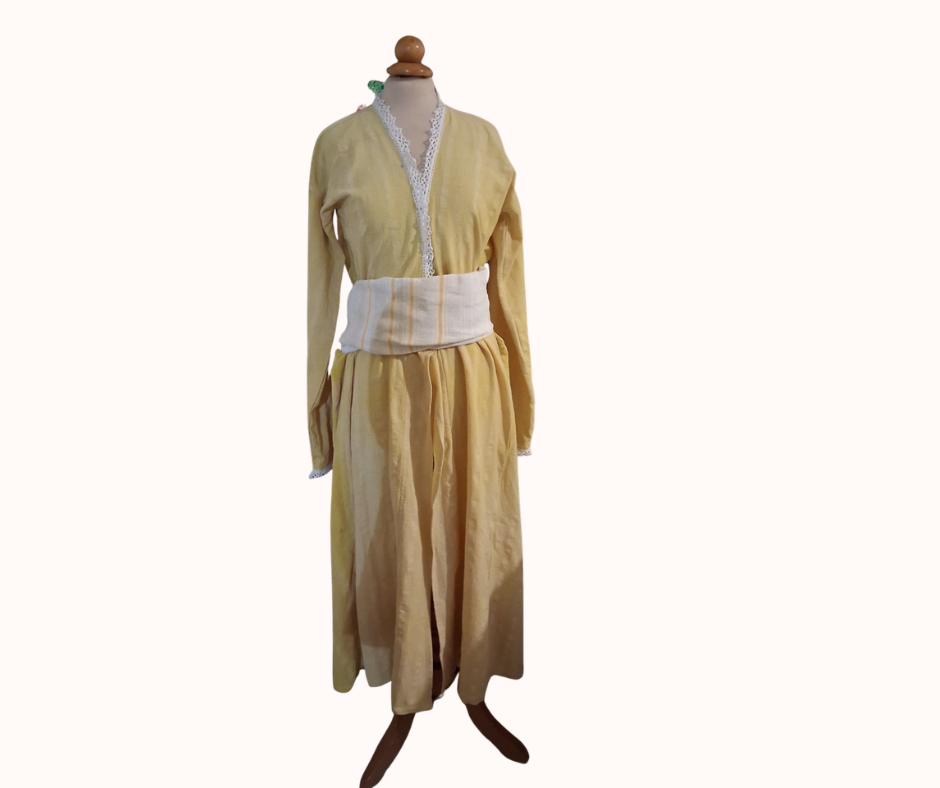
My process started with research into the kavadi, a traditional outer garment from Kalymnos, and with the decision to reinterpret it in a modern and wearable way. I selected an old woven sheet as the main material and a woven tablecloth for the belt and lace details, so the project could remain close to a zero-waste approach. One of the most important steps was dyeing the fabric with turmeric, which transformed the surface while keeping the material natural and non-toxic. I had to think carefully about how the old fabric would behave during cutting and sewing, because reused textiles require patience and gentle handling. I also wanted the silhouette to remain simple, so the historical inspiration would be visible without turning the garment into a costume. The belt helped define the waist and gave the piece more flexibility in styling. The biggest challenge was balancing tradition, construction, and contemporary wearability, but I solved it by keeping the lines clean and the materials honest. In the end, the garment became a dialogue between heritage, craftsmanship, and sustainable design.
Sustainability Aspect | Your Actions / Explanation |
|---|---|
Environmental | I reused existing household textiles instead of purchasing new fabric, dyed the garment with turmeric rather than synthetic colour, and kept the construction low-waste. The project relies on woven natural materials and avoids microplastic-based surfaces. |
Social | The garment keeps the memory of traditional dress and domestic craftsmanship alive by translating a Kalymnian reference into a contemporary piece. It encourages respect for cultural heritage, handmade processes, and slower forms of fashion consumption. |
Financial | The production cost stayed relatively low because the main materials already existed in the household. The simple construction, long life of the woven textile, and timeless shape also support a more cost-efficient and durable design. |
A Message to Consumers
I would like people to know that this garment is not only something to wear, but also a story of transformation. It carries traditional references, reused materials, and a gentle approach to fashion that values care, memory, and sustainability.
A Message to Future Learners
Start by looking at what already exists around you before searching for something new. Tradition can become a powerful source of innovation, and even a simple household textile can be transformed into a meaningful garment with patience, imagination, and respect.
Product Details
Product Name
Kavadi Revival
Reference / SKU
VETRINE-AMORAITI-KAVADI-001 |
Color
Turmeric yellow / off-white
Size
One size / relaxed fit
Weight
Approx. 610 g
Quantity (if multi-pack)
One
Materials Information
Composition
Reused woven bed sheet naturally dyed with turmeric, reused woven tablecloth belt, reused lace trim, cotton sewing thread
% Recycled Materials
% of Recycled / Reused Materials: approx. 92% reused textile content
Traceable assets (materials origin IDs, fibers batches)
Reused vintage bed sheet used for the main garment body; reused woven tablecloth transformed into the belt and lace details; turmeric used as a natural dye; cotton thread for construction and finishing
Manufacturing & Supply Chain
1
Location
Greece
2
Date
Textile selection and concept research: 2026-01-18
Natural dye preparation and dyeing: 2026-02-02
Pattern development and cutting: 2026-02-10
Sewing, belt making, and finishing: 2026-02-17
Final fitting and presentation: 2026-02-24
3
Type of processes
Material selection, research on the traditional Kalymnos kavadi, natural dyeing with turmeric, draping, pattern cutting, sewing, lace finishing, belt construction, final fitting
supply chain map
Tier 4Raw material
Tier 3Material processing
Tier 2Component manufacturing
Tier 1Final assembly
Environmental & Social Impact
Reused household textiles, plant-based turmeric dye, natural woven materials, repairable design, low-waste construction, Microplastics: No
16 hours, EUR 12
Care, Repair & Lifetime Extension
1
Care Instructions
Hand wash gently in cold water, dry flat in shade, iron on low heat, avoid harsh detergents to protect the natural dye
2
Repair Information
Repair seams, lace, or belt by hand when needed; refresh colour with plant-based dye if desired; reuse again as garment or household textile; compost or recycle natural-fibre parts where possible